


Everything You Need to
Know in 2026
In this guide, we'll cover exactly what mobile dentistry is, how it works in Louisiana, what services you can expect, and why thousands of Louisiana residents trust LaDent for dental care at home.
What Is a Mobile Dentist?
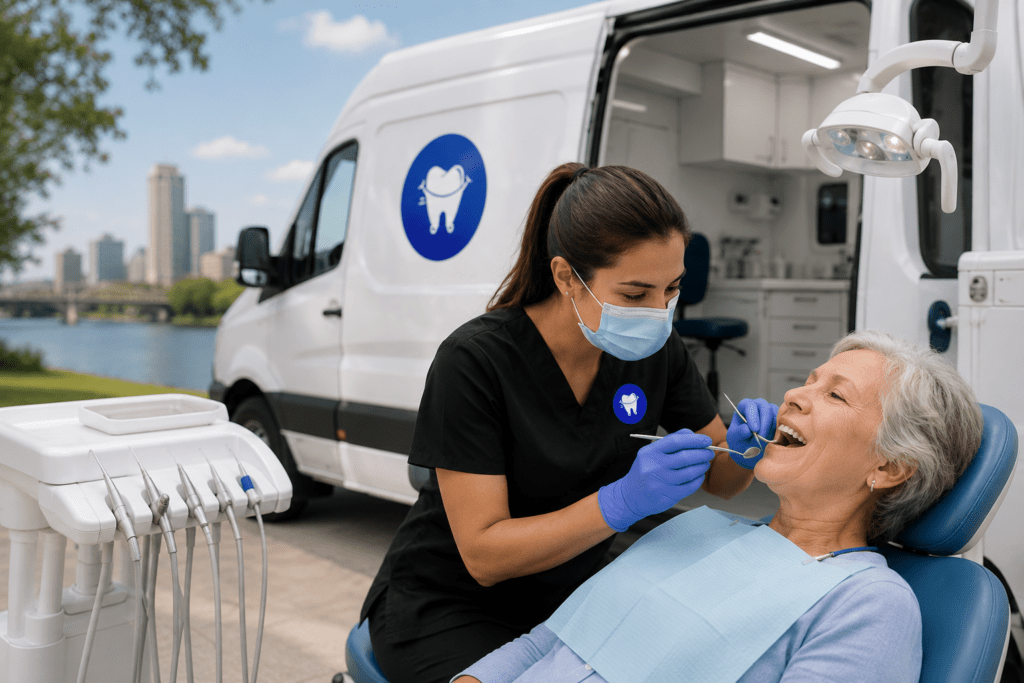
A mobile dentist is a fully licensed dental professional who provides in-person dental care outside of a traditional clinic setting. Instead of you driving to a dental office, the dentist – equipped with portable, professional-grade tools – comes directly to your location.
This model of care is sometimes called:
- Mobile dentistry
- In-home dental care
- Portable dental services
- Concierge dentistry
Why Choose a Mobile Dentist in Louisiana?
Louisiana presents some unique challenges for dental access. From rural parishes in the north to dense neighbourhoods in New Orleans and Baton Rouge, many residents face barriers to routine dental care including:
- Long distances to the nearest dental clinic
- Limited public transportation options
- Difficulty taking time off work for appointments
- Disability, mobility issues, or post-surgical recovery
- Anxiety or dental phobia in clinical settings
- Elderly patients in assisted living or home care
- Busy parents managing multiple children
LaDent eliminates every one of these barriers. Our mobile dental team serves patients across Louisiana – bringing preventive and restorative dental care directly to the places where people live, work, and recover.
What Services Does a Mobile Dentist in Louisiana Provide?
LaDent offers a comprehensive range of mobile dental services across Louisiana. Our portable equipment allows us to perform most standard dental procedures in the comfort of your home or facility.
Preventive Services
- Routine dental exams and oral health assessments
- Professional teeth cleanings (prophylaxis)
- Dental X-rays using portable digital imaging
- Oral cancer screenings
- Fluoride treatments
- Custom mouthguard fittings
Restorative Services
- Tooth-colored fillings for cavities
- Simple and surgical tooth extractions
- Denture fittings, adjustments, and repairs
- Dental crowns (select cases)
- Emergency dental care for pain, infections, or trauma
Specialized Care
- Geriatric dental services for nursing home and memory care patients
- Homebound patient care for individuals with chronic illness or disability
- Pediatric-friendly mobile visits for children with dental anxiety
How Does LaDent's Mobile Dental Service Work?
Booking a mobile dentist in Louisiana with LaDent is a simple, 4-step process:
|
Step
|
What Happens
|
|---|---|
|
1. Book Online or By Phone
|
Choose your preferred date, time, and location - home, office, nursing facility, or anywhere else in Louisiana.
|
|
2. Confirmation & Intake
|
We send a confirmation with a short health history form to complete before your visit.
|
|
3. Dentist Arrives
|
Your LaDent dentist arrives with fully equipped portable dental gear - ready to treat you on the spot.
|
|
4. Treatment & Follow-Up
|
Receive care, get your treatment notes, and schedule any needed follow-up appointments.
|
Where Does LaDent Serve in Louisiana?
LaDent provides mobile dental services throughout Louisiana, including major cities and surrounding parishes. Our current service areas include:
|
Region
|
Cities / Parishes Served
|
|---|---|
|
Baton Rouge Metro
|
Baton Rouge, Prairieville, Denham Springs, Zachary, Baker
|
|
North Louisiana
|
Shreveport, Bossier City, Monroe, Ruston, Alexandria
|
|
Northshore Area
|
Covington, Mandeville, Hammond, Bogalusa
|
Who Benefits Most from Mobile Dentistry in Louisiana?
While LaDent serves patients of all backgrounds, mobile dentistry is especially valuable for:
Elderly & Senior Patients
Many seniors in Louisiana face significant challenges reaching a dental office – from physical limitations to transportation barriers. LaDent provides compassionate, gentle dental care for seniors at home, in assisted living facilities, nursing homes, and memory care centers.
Patients With Disabilities
Mobility-impaired individuals, wheelchair users, and patients with neurological conditions often find traditional dental visits overwhelming or physically impossible. A mobile dentist eliminates these obstacles entirely – treatment happens where the patient is most comfortable.
Busy Working Professionals
With LaDent, you can schedule a dental appointment during your lunch break – at your office. No driving, no waiting rooms, no wasted half-days. Mobile dentistry fits around your schedule, not the other way around.
Families With Young Children
Children with dental anxiety are far more comfortable being treated in their own home. LaDent’s pediatric-friendly approach helps make dental visits less stressful for kids – and less stressful for parents.
Post-Surgical & Homebound Patients
After surgery, illness, or injury, leaving home is often not an option. LaDent ensures that dental health doesn’t get neglected during recovery – we come to you.
How Much Does a Mobile Dentist in Louisiana Cost?
Mobile dental services from LaDent are priced competitively with traditional dental care. We accept most major insurance plans, including:
- Medicaid (Louisiana Medicaid Dental Program)
- Medicare Advantage plans with dental benefits
- Private dental insurance (Delta Dental, Cigna, Aetna, Humana, and more)
- CareCredit and flexible payment plans
For uninsured patients, LaDent offers transparent, flat-rate pricing with no hidden fees – ask our team for a full price list during your consultation.
LaDent Mobile Dentist vs. Traditional Dental Clinic: A Comparison
|
Feature
|
LaDent Mobile Dentist
|
|---|---|
|
Travel Required
|
None - we come to you
|
|
Waiting Room
|
No waiting room at all
|
|
Appointment Flexibility
|
Evenings & weekends available
|
|
Suitable for Seniors
|
Yes - home, nursing home, or facility
|
|
Suitable for Kids
|
Yes - home environment reduces anxiety
|
|
Emergency Appointments
|
Available in most service areas
|
|
Insurance Accepted
|
Yes - most major plans accepted
|
|
Equipment Quality
|
Portable, professional, sterilized
|
Is a mobile dentist as good as a regular dentist?
Yes. Mobile dentists in Louisiana are fully licensed dental professionals. They use the same sterilized instruments, follow the same clinical protocols, and provide the same quality of care as any in-office dentist. The only difference is convenience — they come to you.
What areas in Louisiana does LaDent serve?
LaDent currently serves New Orleans, Baton Rouge, Lafayette, Shreveport, Lake Charles, and surrounding parishes. We are expanding — contact us to check availability in your zip code.
Does insurance cover mobile dental visits?
Most dental insurance plans cover mobile dentistry the same as in-office visits. LaDent accepts Medicaid, Medicare Advantage, Delta Dental, Cigna, Aetna, Humana, and more. We'll verify your coverage before your appointment.
How do I book a mobile dentist in Louisiana?
You can book a LaDent appointment online at Ladent Care, by phone at [phone number], or by text. Select your date, time, and location — we'll confirm within 24 hours.
Is mobile dentistry available for nursing home patients in Louisiana?
Absolutely. LaDent specializes in dental care for residents of nursing homes, assisted living facilities, and memory care centers across Louisiana. We coordinate directly with facility staff to provide seamless care.
How long does a mobile dental visit take?
Most visits last between 45 and 90 minutes, depending on the services needed. LaDent handles all setup and cleanup — minimizing disruption to your day.
Located in - Louisiana
Available at - 10AM TO 07:30PM (GMT+1)
Appointment Today!
