


Destroy Your Teeth: A Guide
for Louisiana Seniors
Most people know sugar causes cavities. Far fewer realize that the medications they take every morning can be doing the same thing - through a process that starts with dry mouth and ends with serious dental damage. This guide explains which medications are the biggest offenders, why dry mouth is dangerous, and exactly what you can do to protect your teeth
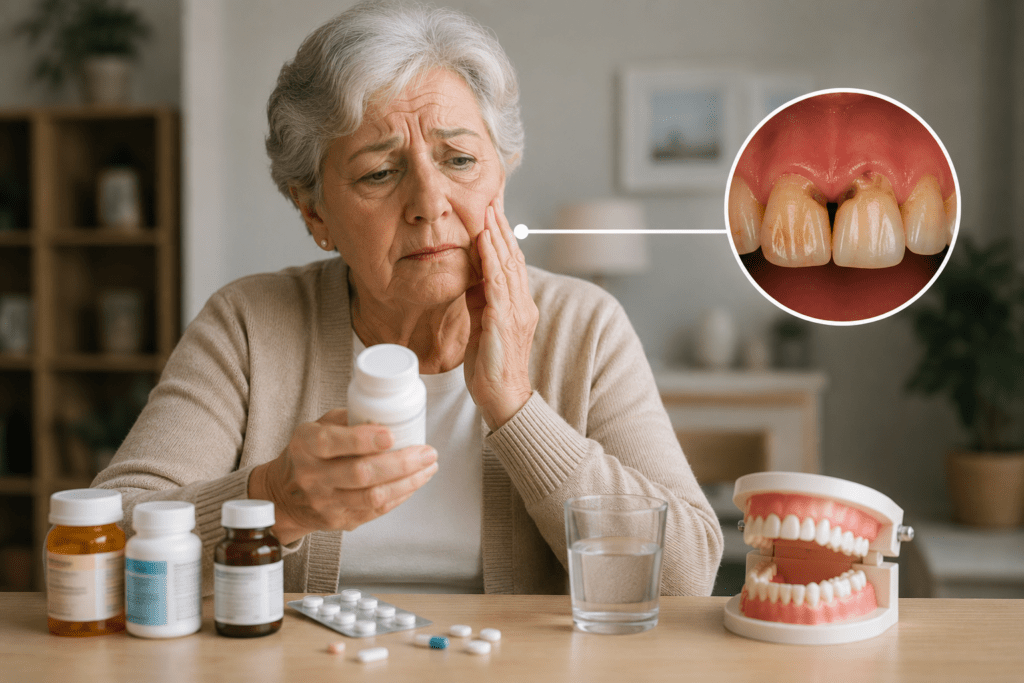
Why Medications Cause Tooth Decay in Seniors?
Over 500 commonly prescribed medications list dry mouth – medically called xerostomia – as a known side effect. For seniors who typically take five or more medications daily, the combined impact on dental health can be severe.
Saliva is not just moisture. It neutralizes acids, washes away bacteria, re-mineralizes enamel, and fights infection. When medications reduce saliva production, every one of these protective functions weakens simultaneously – creating ideal conditions for rapid tooth decay.
The Most Common Offenders: Medications That Harm Your Teeth
Here are the medication categories most likely to cause dry mouth and tooth decay in Louisiana seniors:
|
Medication Category
|
Common Examples
|
Dental Risk
|
|---|---|---|
|
Antihistamines
|
Benadryl, Claritin, Zyrtec
|
High — severe dry mouth
|
|
Antidepressants (SSRIs/TCAs)
|
Zoloft, Prozac, Elavil, Paxil
|
High — dry mouth + taste changes
|
|
Blood pressure (diuretics)
|
Hydrochlorothiazide, Lasix
|
High — severe fluid reduction
|
|
Blood pressure (CCBs)
|
Amlodipine, Norvasc, Verapamil
|
Gum overgrowth (hyperplasia)
|
If you take Fosamax, Boniva, or Reclast — tell your dentist BEFORE any tooth extraction or oral surgery. These drugs can cause osteonecrosis of the jaw (ONJ), where the jawbone fails to heal properly. This risk is manageable when your dentist knows in advance. Never skip this disclosure
Warning Signs Your Medications Are Affecting Your Teeth
Watch for these signs that dry mouth or medication side effects are damaging your oral health:
- Persistent dry, sticky, or burning feeling in the mouth
- New cavities appearing at the gum line – not on biting surfaces
- Teeth that feel increasingly sensitive or are chipping
- Swollen, bleeding, or overgrown gum tissue
- Dentures that no longer fit properly
- Bad breath that does not improve with brushing
These symptoms are often painless in early stages – especially in seniors with reduced nerve sensitivity. By the time pain develops, significant damage may already exist. This is why regular professional exams are essential, not optional.
That’s exactly why dental care at home for Louisiana seniors has become a critical part of managing long-term medication use – regular professional monitoring catches damage before it becomes irreversible.
How to Protect Your Teeth While Taking Medications
The good news: medication-induced dental damage is both preventable and manageable. Here is what Louisiana seniors should do:
1. Tell Your Dentist Every Medication You Take
Bring a complete, up-to-date medication list – including over-the-counter drugs and supplements – to every dental visit. This single habit allows your dentist to assess your specific risk and customize your care plan.
2. Use Prescription-Strength Fluoride
High-risk patients may benefit from prescription fluoride toothpaste (5,000 ppm). It dramatically increases enamel resistance to acid. Ask your dentist whether this is appropriate for you.
3. Stimulate Saliva and Stay Hydrated
- Chew xylitol-based sugar-free gum (Biotene, Spry, Trident)
- Sip water consistently throughout the day – especially after meals
- Use a bedroom humidifier at night to reduce overnight dryness
- Avoid caffeine, alcohol, and tobacco – all reduce saliva production
4. Use Dry Mouth Products
- Biotene mouthwash and oral gel – designed specifically for xerostomia
- ACT Dry Mouth toothpaste for fluoride protection plus moisture
- XyliMelts slow-release discs for overnight saliva stimulation
5. Increase Cleaning Frequency
Seniors on multiple medications typically need professional cleanings every 3–4 months rather than the standard 6-month interval. More frequent visits allow early detection and removal of plaque before it causes permanent damage.
Scheduling a mobile dental cleaning and exam every 3–4 months is the single most effective step a Louisiana senior on medications can take to preserve their natural teeth long-term.
How LaDent Helps Louisiana Seniors on Medications
Managing medication-related dental risks requires consistent professional care. But for many Louisiana seniors, getting to a dental office every 3–4 months is a real challenge. LaDent eliminates that barrier.
- We come to your home, nursing facility, or assisted living center — anywhere in Louisiana
- We review your complete medication list at every visit and adjust your care plan
- We provide prescription fluoride treatments for high-risk patients
- We accept Louisiana Medicaid, Medicare Advantage, and most private dental insurance
- We offer flexible scheduling including evenings and weekends
Which medications most commonly cause dry mouth and tooth decay in seniors?
The biggest offenders are antihistamines (Benadryl, Claritin), antidepressants (Zoloft, Elavil), diuretics (Lasix, HCTZ), bladder medications (Detrol, Ditropan), and opioid pain relievers. Over 500 commonly prescribed drugs list dry mouth as a side effect.
How often should seniors on multiple medications see a dentist?
Every 3–4 months rather than the standard 6-month interval. Seniors on polypharmacy (5+ medications) face significantly higher decay risk and benefit from more frequent professional monitoring and cleaning.
Can medication-induced tooth decay be reversed?
Very early demineralization can be reversed with fluoride. Once a cavity forms, it requires a filling. This is why early detection through regular exams is critical — waiting for pain means waiting too long.
I'm homebound in Louisiana. Can I still get proper dental care?
Yes. LaDent provides professional mobile dental care for homebound and senior patients throughout Louisiana - including digital X-rays, cleanings, fluoride treatments, and fillings - at your home or facility. No travel required.
Is mobile dentistry available for nursing home patients in Louisiana?
Absolutely. LaDent specializes in dental care for residents of nursing homes, assisted living facilities, and memory care centers across Louisiana. We coordinate directly with facility staff to provide seamless care.
How long does a mobile dental visit take?
Most visits last between 45 and 90 minutes, depending on the services needed. LaDent handles all setup and cleanup — minimizing disruption to your day.